Session 2026-27Classes 3–12Narnaul, Haryana
Your school can produce founders.
In-house. All year.
A full-year AI, coding & innovation lab program for Classes 3–12 inside your school — curriculum, trained mentor, kits and Demo Day. Aligned with NEP 2020 & Atal Tinkering Lab goals.
- 3 days free · no contract
- From ₹380 / student / month
- NEP 2020 aligned
3 days free
Run real Revonix classes in your school first. No payment, no contract.
Prices on the website
Every class fee is published. Nothing is decided behind closed doors.
Local team in Narnaul
Same-day visits across Mahendragarh district, weekly in nearby cities.
A mentor on your campus
Two sessions a week, taught by a trained Revonix mentor, not a video.
What students make
Real projects, every month
A few units from our 10-month plans, from Class 3 stories to Class 12 pitches.
- CL 3Panchatantra Premiere
- CL 4Game Jam Capstone
- CL 5Bias Detective
- CL 6Circuits 101
- CL 7Sensors that React
- CL 8IoT with ESP32
- CL 9Ship & Demo Day
- CL 10Ship to Real Users
- CL 11First Paid Project
- CL 12Pitch Season
- CL 3Picture Stories Camp
- CL 4Quiz Master
- CL 5AI-Powered Games
- CL 6My First Web Page
- CL 7Apps that Remember
- CL 8Portfolio Site
- CL 9Backend-as-a-Service
- CL 10Evaluating AI Output
- CL 11Business Model Canvas
- CL 12Revonix Demo Day
How it works in your school
Four steps, repeated all year
Students find a problem, build a fix, test it with real people and show it on Demo Day.
Step 1 of 4 · Find a problem
Step 01 · Find a problem
Look around your own school
Students look around their school and town, talk to teachers and classmates, and choose one real problem worth fixing.
- Look around
- Ask people
- Pick one problem
Students choose the problem. The mentor helps them narrow it down.
Ideas a team might try
Crowded shoe racks
A queue at the break bell. Could a small idea help?
An overflowing water cooler
Students notice it, measure it, then think of a fix.
A noisy reading corner
How loud is too loud? A good question to test.
Then the loop starts again, with bigger tools. Scratch first, then web pages and micro:bit, then ESP32 and AI apps.
See how it worksA picture of a code editor. It cycles through four short examples: Scratch blocks in Class 3, an HTML page in Class 6, an ESP32 sensor program in Class 8, and a call to an AI tutor in Class 10.
it types by itselfFrom Scratch to startup
Students start with blocks. They finish with real code.
Each year the tools get a little more grown-up. Nothing is rushed, and every class builds on the one before.
- Class 3drag blocks to tell a story
- Class 6write a first web page
- Class 8connect a sensor to the internet
- Class 10build an app that uses AI
The level ladder
One ladder. Ten classes. Four steps up.
Students climb from Scratch stories in Class 3 to paid client projects and a startup pitch in Class 12. Every class builds on the year before and ends in work a parent can see.
- Step 1Classes 3–5
Explorer
- Focus
- Computational thinking, Scratch, AI through play and storytelling
- Output
- Animated stories, simple games
- 3Story Explorers
- 4Game Builders
- 5Young Inventors
- Step 2Classes 6–8
Builder
- Focus
- Web basics with AI help, App Inventor, electronics & IoT
- Output
- Personal website, first app, a working gadget
- 6Maker
- 7Coder
- 8Shipper
- Step 3Classes 9–10
Creator
- Focus
- Full websites, AI-powered apps via APIs, product design
- Output
- A real app that solves a school or local problem
- 9Full-Stack Designer
- 10AI Product Builder
- Step 4Classes 11–12
Founder
- Focus
- Client projects via Revonix Studio, startups, pitching, freelancing
- Output
- Paid projects, a startup pitch, a strong portfolio
- 11Studio Apprentice → Freelancer
- 12Founder Sprint
See every month, and every price.
Each class has a 10-month plan, written out session by session. The price list is public.
A week in your school
Two sessions. The rest of the week stays yours.
Every class gets two sessions a week, from 50 to 90 minutes depending on the class. Here is one example week.
- Mon
Normal school day
Nothing changes in your timetable.
- TueLab
Session 1
Start
The mentor sets the challenge. Students pick an idea and start building.
- Wed
Normal school day
Regular classes.
- Thu
Normal school day
Regular classes.
- FriLab
Session 2
Build and show
Students finish, test with a friend and show the class what works.
- Sat
Rest
Time for family and play.
Example week only. We fit the two sessions into the timetable that suits your school.
For principals
Why principals choose Revonix
We take care of the curriculum, the mentor and the kits. You get a program that parents can see.
We handle the setup
Curriculum, mentor and kits. You do not have to build anything from scratch.
A trained mentor on campus
Our mentor teaches with our curriculum. Your teachers do not need to learn to code first.
744 lesson plans, ready
Every class has a 10-month plan, written down session by session.
Supports NEP 2020 and your ATL
Hands-on, project-based learning. We use your Atal Tinkering Lab or computer lab.
No lab? We start in a classroom.Supports CBSE subjects, Classes 10–12
Our AI and coding units support CBSE Artificial Intelligence (417) and Informatics Practices (066). They support these subjects; they do not replace them.
Parents see the results
Each year ends with a Demo Day where children present what they built. You get photos and stories for your admissions.
The feeling in the room
Messy tables. Loud ideas. Proud faces.
This is what a studio year should feel like: curious in April, building through the year, and clapping on Demo Day.
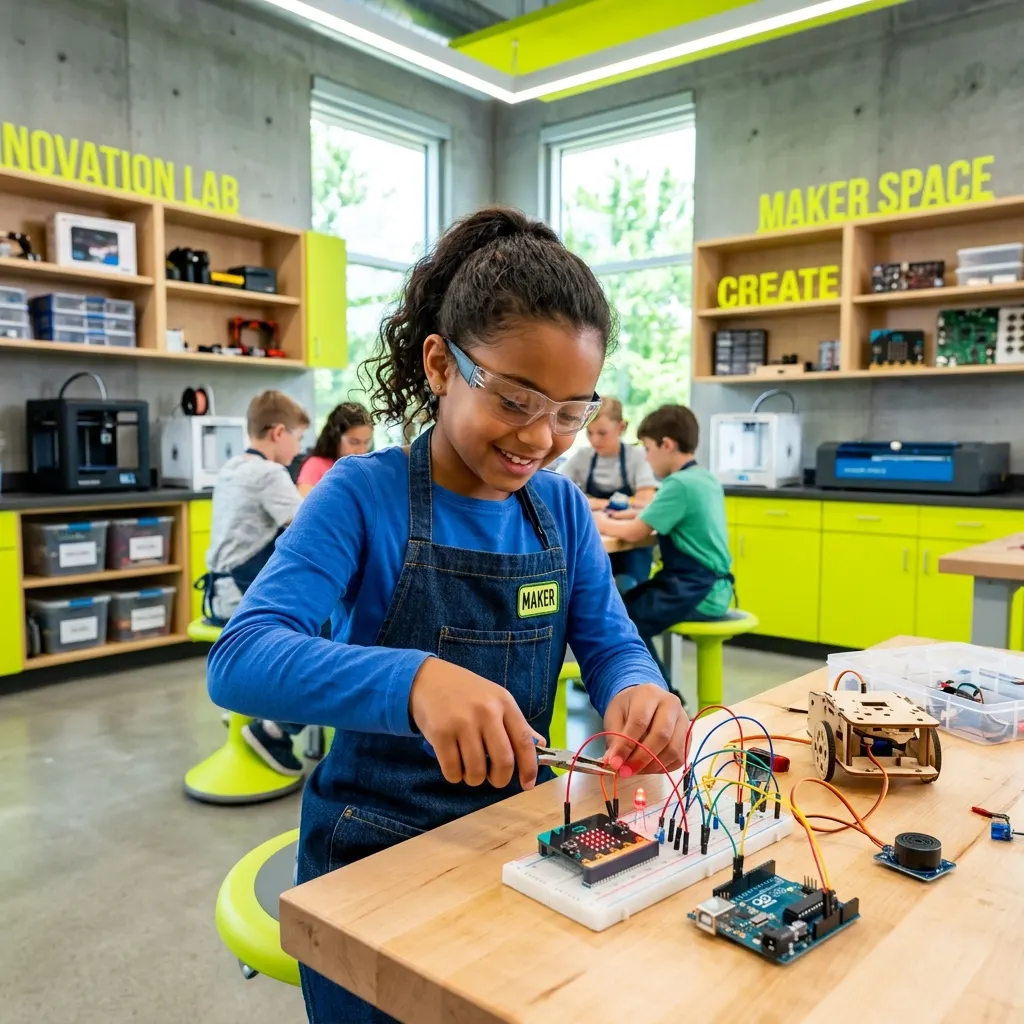
Breadboards before lunch 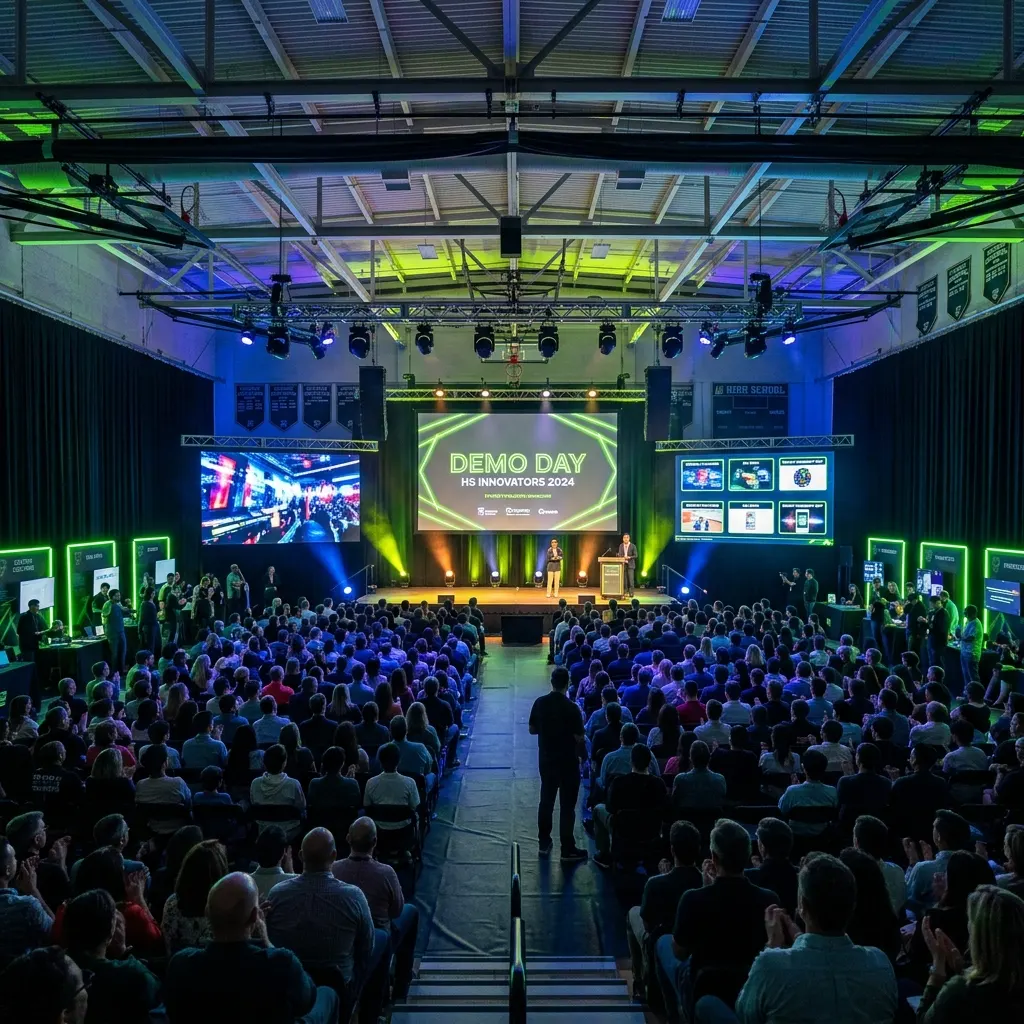
Demo Day nerves → applause 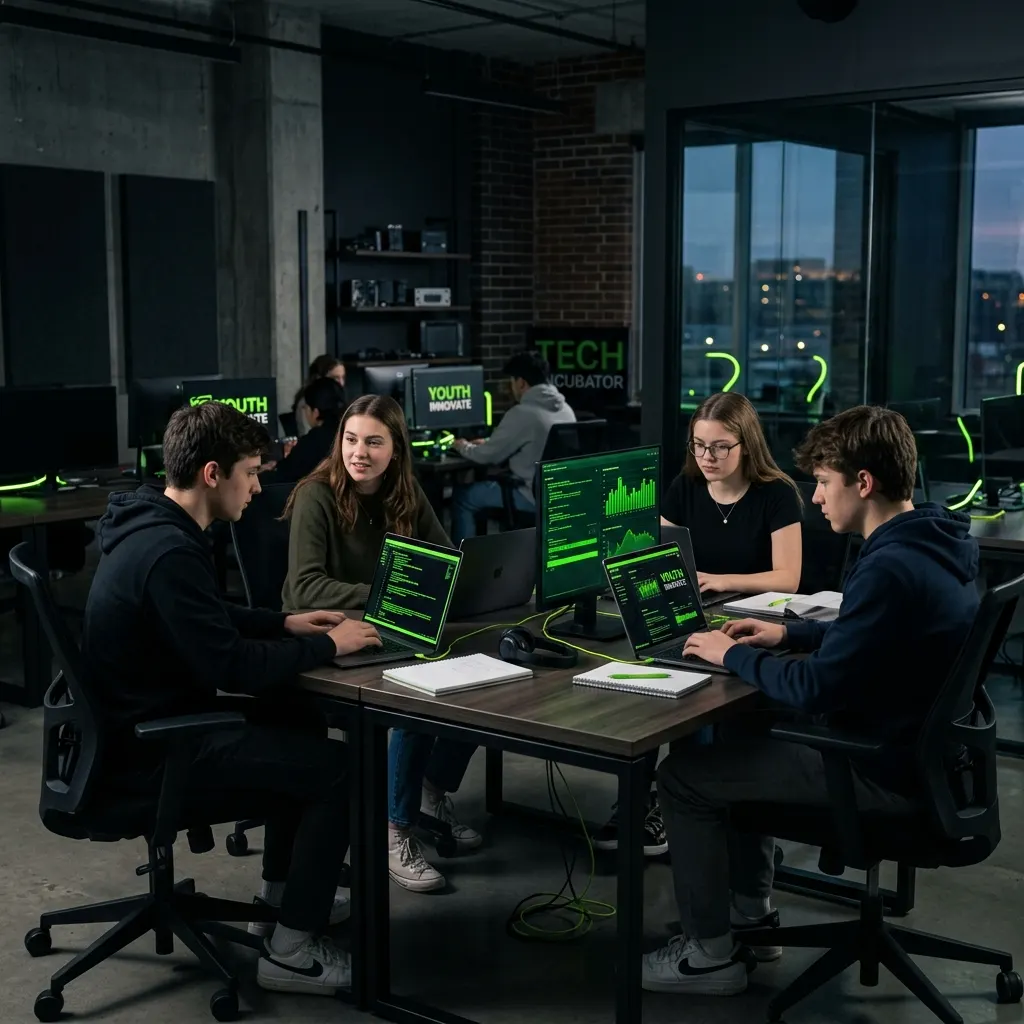
Code that a parent can click
Your school’s photos could be pinned here next.
Questions principals ask
Straight answers
Short answers to what principals ask us most.
How much does the program cost?
From ₹3,800 per student per year for Class 3 up to ₹10,000 for Class 12, billed over 10 months (₹380–₹1,000 a month). The full class-wise price list is on our Programs page. Every school can try 3 days free first, with no payment and no contract.
How does it fit into our timetable?
Every class gets 2 sessions a week: 50 minutes for Classes 3–5, 70 minutes for 6–8 and 85 minutes for 9–10. Classes 11–12 have a 90-minute studio plus a 60-minute check-in. We fit into existing computer, ATL or activity periods.
Which grades is it for?
Classes 3 to 12, in four levels: Explorer (3–5), Builder (6–8), Creator (9–10) and Founder (11–12). Each class has its own 10-month plan that builds on the year before.
Do we need a lab?
A computer lab is enough to start. If you have an Atal Tinkering Lab, the electronics and IoT units (Classes 6–8) use it. No new construction needed.
Who teaches the classes?
A Revonix-trained mentor teaches on your campus with our ready lesson plans (744 of them, month by month) and weekly support from our team. Your own teachers can join our certification track.
Is it safe for students?
Yes. Electronics kits are low-voltage (5–12V), tools are age-appropriate and every session is supervised by a trained mentor. AI units teach responsible and fair use.
What do students take home?
Work a parent can see: animated stories and games (3–5), a website, an app and a working gadget (6–8), a real app (9–10), and paid projects or a startup pitch (11–12) — plus a certificate and a Demo Day every year.
How long is the contract?
One academic year, renewed yearly. Start with 3 days free in your school and decide after you see your students build.
Talk to us
Have a question? Talk to a real person.
We reply within 24 hours. We are available Mon–Sat, 9am–7pm.
Dear Principal,
Wondering how this fits your timetable, or what it costs? Call, message or write to us. A real person will answer.
Warm regards,
Rishi Yadav, Revonix Labs
3 days free · Run 3 full days of Revonix classes in your school. No payment, no contract.
See it running in your school.
We bring the kits and run a free demo class with your students. You watch, then decide.